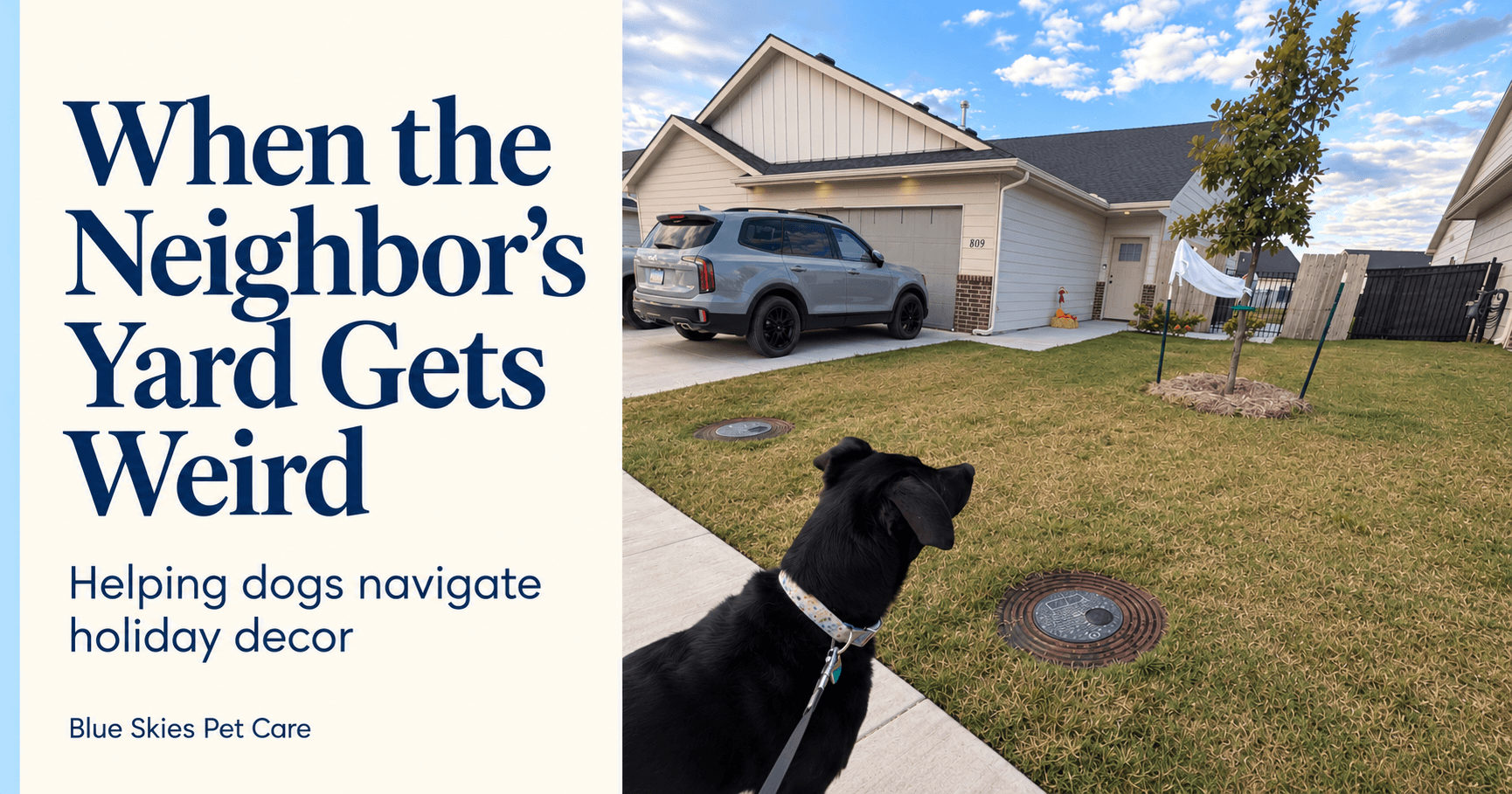
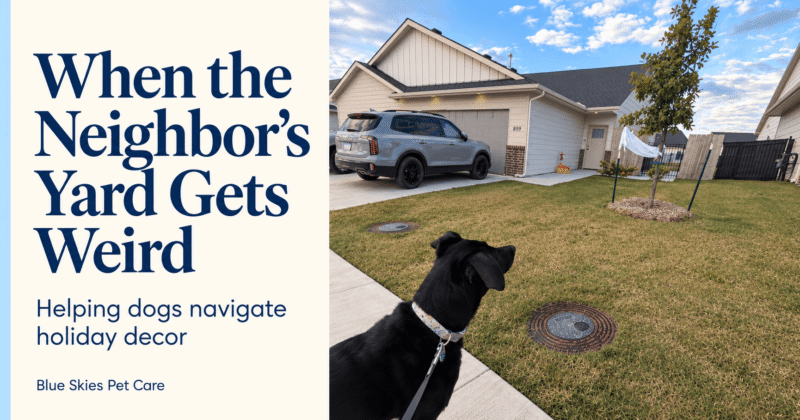
Yesterday, your dog walked past the neighbor’s yard without a second glance. Today, there’s a twelve-foot skeleton standing next to the mailbox and sheet ghosts flapping in the trees.
Your dog has…… concerns.
Halloween decorations can turn familiar walking routes into a collection of surprises: floating ghosts, giant spiders, inflatable monsters, and figures that suddenly move or make noise. Even a small ghost hanging from a tree can warrant a very serious investigation, especially when the wind makes it flutter overhead.
For people, that’s part of the fun!! For dogs, it can be confusing or frightening.
And once the skeletons and ghosts disappear, scarecrows, inflatable turkeys, glowing reindeer, and waving Santas are often right behind them.
A little preparation can help your dog navigate the whole season with more confidence.
Why Decorations Can Be Unsettling
Dogs don’t understand that the neighborhood is decorating for a holiday. They notice that something about a familiar place has changed.
And that change doesn’t have to be enormous or particularly spooky.
A small ghost hanging from a branch moves differently than the leaves around it. A scarecrow looks vaguely like a person but stands unnaturally still. A plastic pumpkin has appeared beside a previously unremarkable driveway.
Something unfamiliar is now dangling above the sidewalk. And for a lot of dogs, unfamiliar is what’s scary.
Different decorations introduce different challenges:
- Hanging decorations: Ghosts, bats, witches, and dangling spiders may flutter, spin, or move overhead.
- Stationary figures: Skeletons, scarecrows, statues, and silhouettes can change the familiar outline of a yard.
- Inflatables: Fans hum while large figures sway, deflate, or rise from the ground.
- Animated decorations: A figure may turn its head, reach forward, or suddenly pop up.
- Lights and projections: Flashing lights, moving patterns, and shifting shadows can make familiar surfaces look different.
- Sound effects: Cackling witches, howling creatures, music, and motion-activated noises add another layer of surprise.
Even a dog who usually handles new experiences comfortably may hesitate at one particular decoration. Forcing a closer inspection can increase fear instead of resolving it.
We’re also keeping an eye out for seasonal decorations on our regular client dog walks, giving dogs extra space and time when something unfamiliar catches their attention.
Your dog doesn’t need to understand Halloween or Thanksgiving or Christmas, but just need to feel safe walking through their neighborhood.
Start Before Your Dog Is Scared
As decorations begin appearing around Newton and Hesston and on your usual walking routes, bring small, tasty treats along – even if your dog hasn’t reacted to anything yet.
Watch for changes ahead so you can give your dog room to notice them without suddenly finding themselves directly beside – or underneath – something unfamiliar.
That might mean observing a hanging ghost from farther down the sidewalk, passing a skeleton on the opposite side of the street, or briefly watching an inflatable from a comfortable distance.
When your dog notices the decoration, say “Nice!” and offer a treat. “Nice!” is a marker word that tells your dog something good is coming. By pairing the sight of the decoration with a tasty treat, we’re helping build a positive emotional association. Then let them return to sniffing, look elsewhere, or continue walking.
There’s no need to visit every display. A few brief, comfortable experiences give you something useful to build on.
Let Your Dog’s Body Language Set the Distance
One dog may stroll past a giant spider while another needs extra space around a small pumpkin. The size of the decoration doesn’t determine how your dog feels about it.
Look for a loose body, comfortable movement, and the ability to notice the decoration and then look away within about five seconds. Your dog should still be able to engage with you and explore their surroundings.
Signs they may need more space include:
- Freezing or becoming stiff.
- Staring without being able to disengage.
- Leaning away, crouching, or tucking their tail.
- Repeatedly scanning the area.
- Barking, growling, lunging, or trying to leave.
A dog who becomes very still may be worried, even if they’re quiet. Taking treats doesn’t automatically mean they’re comfortable, either. Look at their whole body and how readily they can shift their attention.
If concern is building, create distance. Cross the street when safe, turn around, or choose another route.
Your dog’s response tells you how much space they need.
The reason we are trying to build that positive association when they are not already freaked out is simple: if you give me candy when there is a spider across the room, we might be in business. If you cover me in spiders and offer me an M&M, I don’t think you’re going to be helping.
Make the Decoration Predict Something Good
Two useful training tools are desensitization, which introduces something at a manageable intensity, and counterconditioning, which pairs it with something the dog enjoys. These approaches work together: exposure should be gradual enough that the dog can remain comfortable.
Here’s how that might look with a small ghost hanging in a tree:
- Start at a comfortable distance. Your dog can see the ghost without becoming tense or fixated.
- Let noticing it predict a treat. When your dog spots the ghost, offer something tasty. They don’t need to sit or move toward it first.
- Allow a break. Let them look away, sniff, or move farther away.
- Keep it brief. A few comfortable repetitions may be enough for that outing.
- Adjust gradually. Move a little closer on a later attempt only if your dog remains relaxed. There’s no requirement to get closer during every session!
The same process can apply to a scarecrow, a glowing reindeer, or an inflatable turkey.
The goal is for your dog to notice something unusual and still feel safe enough to carry on with their day.
Movement, Sound, and Darkness Can Change the Experience
A decoration your dog comfortably passed yesterday may look very different today.
That little ghost may have been still yesterday and whipping around in the Kansas wind today. An inflatable that was a pile of fabric in the morning may be towering over the sidewalk by evening. A quiet figure may begin moving when someone steps near its sensor.
After dark, lights and shadows can also change a display’s appearance.
Treat those changes as new information for your dog. Give them more space again, even if they previously seemed comfortable.
When practicing with your own decorations, introduce features separately when possible: stationary first, then gentle movement, lights, or low-volume sound. Avoid adding everything at once.
Skip the “Come See, It’s Fine!” Approach
It’s tempting to lead your dog closer so they can see that the decoration is harmless.
But your knowledge that the ghost is a piece of fabric doesn’t auto-magically make your dog feel better about it.
Avoid pulling them toward a display, holding them beside it, or using treats to lure them closer than they would comfortably choose to go.
Offer treats where your dog already feels safe. If they choose to investigate, allow it only when it’s safe, you have permission to approach, and they can freely move away.
Be especially thoughtful about hanging decorations. Walking directly beneath something unfamiliar may be much harder for your dog than observing it from the side.
Comfortably passing a decoration is a perfectly good goal. Your dog never needs to touch it. (Plus, we want to respect the neighbor’s yard and property!)
If Something Suddenly Startles Your Dog
Sometimes a decoration activates before you realize it can move. Sometimes a gust of wind sends a hanging spider swinging toward the sidewalk.
Help your dog get some space.
Use a cheerful, familiar “let’s go” cue if they know one, and move away with them. Avoid stopping beside the display to ask for repeated sits or waiting there until they “get over it.”
Once you’re farther away, give them time to recover. Offer treats if they want them, allow some sniffing (tossing treats on the ground is a great way to encourage this!), and consider a quieter route or heading home.
It’s okay to reassure your dog when they seek support. Stay calm and help them feel safe.
Decorating Your Own Yard? Introduce Changes Gradually
At home, you have more control over what your dog encounters.
Start with one or two decorations instead of unveiling the entire display at once. Let your dog observe from a comfortable distance, with sound and animation turned off.
Think about placement, too. A ghost hanging over the only path to the potty area may create a challenge several times a day. A motion-activated figure beside the back door may startle your dog every time they go outside.
Keep an easy route available, secure decorations so they don’t unexpectedly fall or swing into your dog’s space, and keep cords, stakes, and dangling materials away from walking paths.
Your dog can enjoy their home without participating in every part of the decorating.
From Halloween Ghosts to Christmas Reindeer
Once Halloween ends, the neighborhood transformation often continues.
Thanksgiving brings scarecrows, corn stalks that rustle in the wind, and oversized inflatable turkeys. Christmas adds wreaths, hanging ornaments, glowing animals, moving projections, music, and Santas who wave from the lawn.
The same thoughtful approach applies throughout the season: notice changes, allow space, pair manageable experiences with good things, and adjust to your dog’s response.
Comfort with one decoration won’t necessarily transfer to every other kind. Your dog may ignore a stationary skeleton but worry about a fluttering ribbon or a snowman that suddenly lights up.
On especially busy evenings, give yourself permission to choose an easier walk. For Halloween, that may mean heading out before trick-or-treating begins and avoiding crowded displays. Dogs Trust also recommends moving away from encounters that may frighten your dog.
Help Your Dog Enjoy the Season at Their Own Pace
You don’t have to turn every holiday display into a training opportunity. Sometimes crossing the street is the best choice for you and your dogs’ sanity.
Sometimes a brief look, a treat, and continuing your walk is enough.
If your dog’s reactions are making everyday walks difficult, Blue Skies Pet Care offers dog training in Newton, Hesston, and Wichita areas.
We start wherever your dog is and build skills at their pace.
Visit BlueSkiesPetCare.com or email bark@BlueSkiesPetCare.com to learn more.
The neighborhood may get wonderfully weird this time of year. A little patience can help your dog feel more comfortable sharing it.