
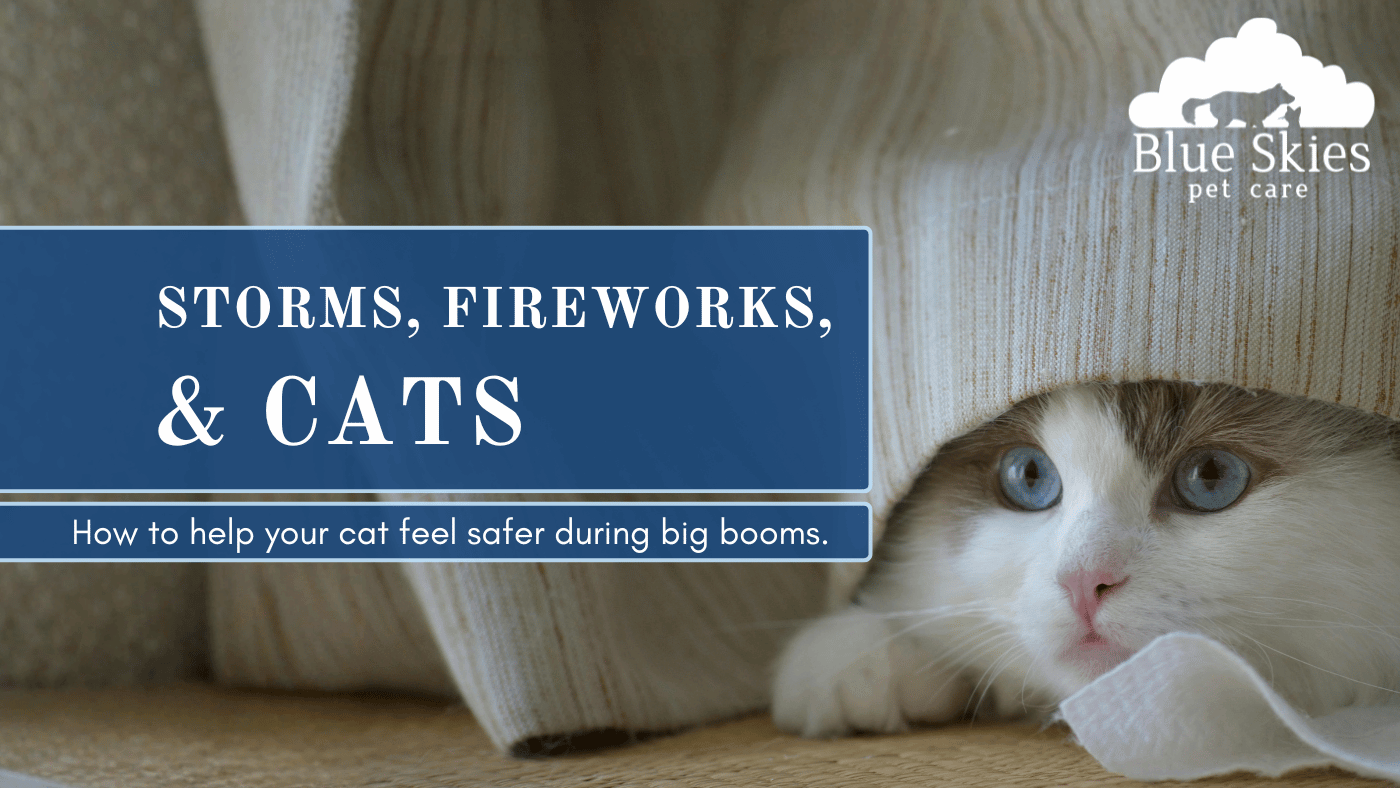
Storm season leading right into fireworks season can be stressful for cats, too.
Dogs often get more attention when we talk about thunderstorm or fireworks anxiety, but cats can absolutely struggle with loud, unpredictable sounds. The difference is that cats may show stress more quietly. Instead of barking or pacing around the house, a worried cat may disappear under the bed, hide in a closet, refuse dinner, avoid the litter box, or become unusually still.
In Kansas, storm season and fireworks season can overlap in a way that makes life extra hard for sensitive pets. Whether you live in Newton, Hesston, McPherson, Wichita, or a surrounding community, it helps to prepare your cat before the big booms begin.
At Blue Skies Pet Care, we provide in-home cat sitting and pet care for local families and one of the things we care deeply about is helping pets feel safe, comfortable, and understood in their own homes.
Do Cats Get Scared of Storms and Fireworks?
Yes. Cats can be frightened by thunder, fireworks, high winds, heavy rain, flashing lights, changes in routine, visitors, and other sudden disruptions.
Some cats are more sensitive than others. A cat who was not exposed to many household or outdoor sounds early in life, has had scary experiences, is aging, has pain or health changes, or is naturally cautious may have a harder time coping with loud seasonal noises.
And because cats are so good at hiding discomfort, their stress can be easy to miss.
Signs Your Cat May Be Stressed by Thunder or Fireworks
A stressed cat may show obvious signs, subtle signs, or a mix of both.
Watch for:
- Hiding more than usual
- Refusing food or treats
- Skipping the litter box or having accidents
- Trembling
- Dilated pupils
- Flattened ears
- Crouched or frozen body posture
- Tail tucked tightly around the body
- Growling, hissing or swatting
- Excessive grooming
- Restlessness
- Trying to escape
- Becoming unusually clingy
- Staying completely still or “shut down”
- Not coming out after the noise has passed
Hiding during loud events is not immediately or always a problem. For many cats, hiding is a normal coping strategy. The concern is when your cat seems panicked, cannot settle, will not eat or use the litter box, acts aggressively out of fear, tries to escape, or takes a long time to return to normal.
Give Your Cat a Safe Place to Hide
One of the kindest things you can do for a cat during storms or fireworks is to make sure they have access to safe hiding places.
Cats feel safer when they can choose where to go. Instead of pulling your cat out from under the bed or forcing them to stay with you, give them options.
Good safe-space ideas include:
- A quiet bedroom
- A closet with the door cracked open
- A covered cat bed
- A cardboard box with soft bedding
- A carrier left open with a cozy blanket inside
- A bathroom away from windows
- A favorite cat tree or elevated perch
- A familiar room with food, water, and a litter box nearby
Try to set up the space before storms or fireworks begin. Once your cat is already scared, changes can feel more stressful.
What to Put in Your Cat’s Storm or Fireworks Safe Space
A good cat-safe space should feel familiar, quiet, and low-pressure.
Consider adding:
- Fresh water
- A small amount of food, if appropriate
- A litter box nearby
- Soft bedding
- A familiar blanket or item that smells like home
- Favorite toys
- A scratching surface
- A covered bed, box, or hiding spot
- White noise, a fan, or calming music
- Closed curtains or blinds to reduce flashes of light
The goal is not to trap your cat. The goal is to make it easy for your cat to choose a safe, comfortable place.
Should You Play Storm or Fireworks Sounds for Your Cat?
Some cats may benefit from very gentle sound practice, but it needs to be done carefully.
The idea is not to blast thunder or fireworks sounds and hope your cat “gets used to it.” That can make fear worse.
If your cat is relaxed and food-motivated, you may be able to play storm or fireworks sounds at an extremely low volume while your cat enjoys something positive, such as a meal, lickable treat, or favorite snack. The sound should be so quiet that your cat baaaaarely notices it.
If your cat stops eating, leaves the room, hides, freezes, flattens their ears, or seems worried at all, the sound is too loud or the practice is too difficult.
For many cats, environmental preparation is more helpful than formal sound practice. Start with safe spaces, predictable routines, and reducing exposure.
Do Not Force Your Cat to “Face Their Fear”
Cats do not need to be pulled out, held, carried around, or made to sit near the sound source.
Avoid:
- Dragging your cat out of hiding
- Blocking hiding spots
- Forcing your cat to be held
- Punishing hissing, swatting, or hiding
- Playing loud storm or fireworks videos
- Waiting until July 4th or a severe storm to make a plan
- Leaving doors or windows unsecured during fireworks
Fearful cats need control and choice. When your cat knows they can hide, retreat, and stay safe, they are more likely to recover calmly.
Before Fireworks or Severe Weather: Cat Safety Checklist
Before fireworks season or a forecasted storm, take a few simple steps:
- Keep your cat indoors
- Close windows and secure screens
- Close curtains or blinds
- Update your cat’s microchip information
- Make sure ID tags are current if your cat wears a collar
- Set up a safe room or hiding area
- Place food, water, and a litter box where your cat can access them
- Use white noise, a fan, or calming music
- Avoid hosting loud gatherings in your cat’s safe space
- Tell your pet sitter where your cat usually hides
This is especially important for families traveling during the Fourth of July, summer vacations, or storm season. A cat who hides during a pet sitting visit may not be being difficult or unfriendly – when we’re pet sitting, we don’t take it personally. They may be coping with stress in the safest way they know how.
How a Cat Sitter Can Help During Storms and Fireworks
In-home cat sitting can be a great option for cats because it allows them to stay in their familiar environment. For many cats, staying home is less stressful than traveling or boarding.
A thoughtful cat sitter can help by:
- Keeping your cat’s routine consistent
- Checking food, water, and litter box habits
- Making sure hiding spots remain accessible
- Not forcing interaction if your cat is scared
- Watching for stress signs
- Sending updates about behavior changes
- Securing doors carefully during every visit
- Giving medication or supplements if prescribed by your veterinarian
- Providing calm companionship for cats who seek attention
At Blue Skies Pet Care, our team understands that cat care is not just “scoop, feed, and go.” Cats are individuals. Some want playtime and chin scratches. Some want quiet company. Some want their routine followed exactly while they observe from a safe distance. We’re here for them all.
When to Talk to Your Veterinarian
If your cat has a strong fear response to storms or fireworks, talk with your veterinarian before the next noisy event.
Veterinary support may be especially important if your cat:
- Stops eating
- Has litter box accidents during stressful events
- Hides for long periods after the noise ends
- Trembles or seems panicked
- Acts aggressively when scared
- Tries to escape
- Has known health concerns
- Is older or may be experiencing pain
- Cannot settle during storms or fireworks
Some cats may benefit from medication or other veterinary-guided support during predictable stressful events if the earlier suggestions do not seem to ease distress. That does not mean you did anything wrong.
Local Cat Sitting and Pet Care in Newton, Hesston, McPherson, and Nearby Kansas Communities
Blue Skies Pet Care provides in-home pet sitting and cat care for families in Newton and surrounding communities, including nearby areas such as Hesston, Halstead, Sedgwick, Mcpherson, and North Newton. We also support pet families in the broader region through select services.
Whether you are traveling during storm season, planning a Fourth of July trip, or simply want reliable daily care for your cat, our team is here to help your pet stay safe and comfortable at home.
Our pet care services may include:
- Cat sitting
- Feeding and fresh water
- Litter box care
- Medication support
- Playtime or enrichment
- Calm companionship
- Home checks
- Updates while you are away
- Care for multi-pet households
Cats deserve loving and thoughtful care, especially during stressful seasons.
The Big Takeaway
Storms and fireworks can be scary for cats, but preparation can make a big difference.
Give your cat safe hiding options. Keep routines predictable. Reduce noise and flashes where you can. Watch for subtle signs of stress. Do not force interaction. And if your cat panics, talk with your veterinarian about extra support.
Your cat is not being dramatic. They are trying to feel safe.
And that is something we can help with.
Need cat sitting or pet care during storm season or fireworks season?
Blue Skies Pet Care is here to support cats and their families in Newton, Hesston, McPherson, and surrounding Kansas communities.