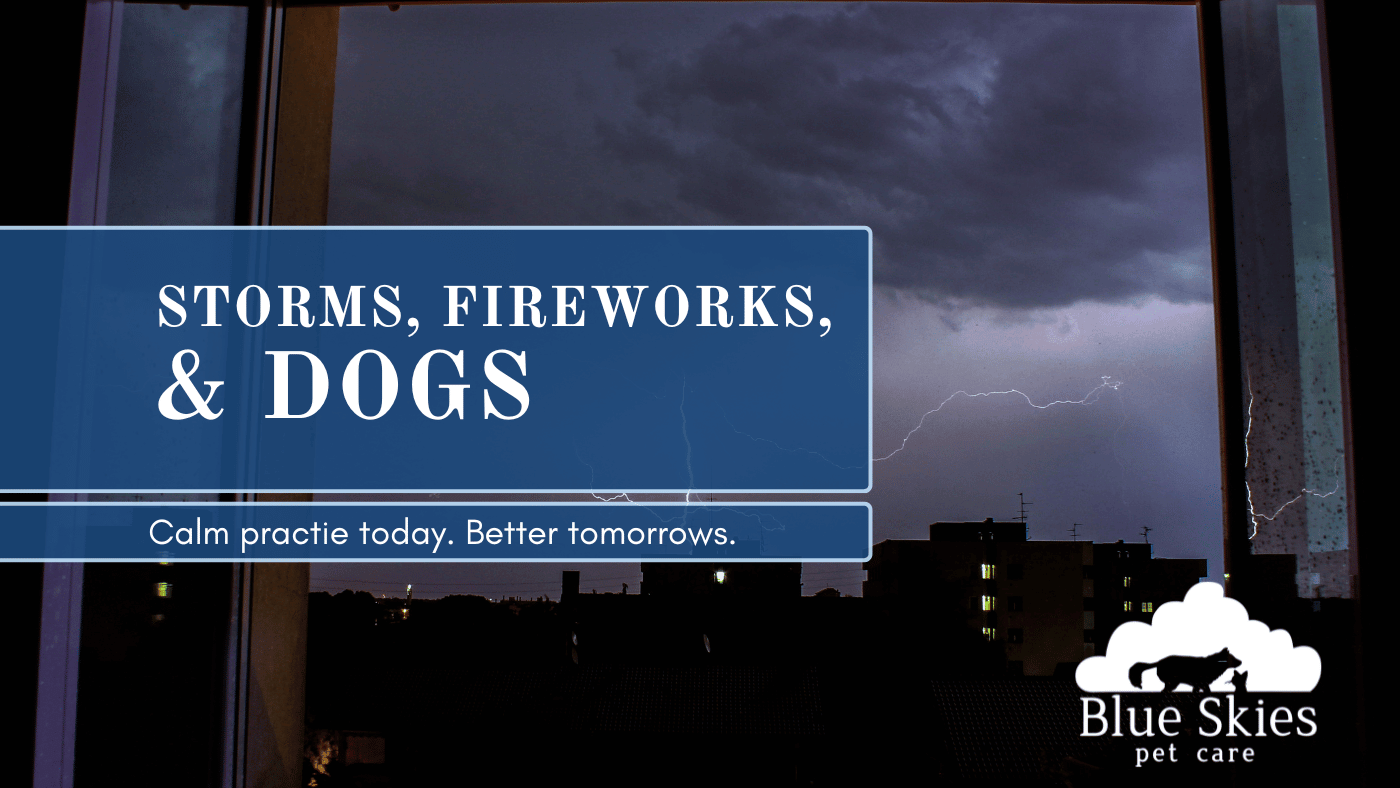
Storm season leading right into fireworks season can be ruff. Between Kansas thunderstorms, Fourth of July fireworks, and surprise neighborhood booms – many dogs struggle with sudden loud sounds.
Some dogs hide. Some bark. Some pace, pant, shake, or try to escape. And some dogs seem “fine” on the outside, but their body language tells a quieter story.
The good news? With thoughtful practice, many dogs can learn that storm and fireworks sounds are not always something to panic about. The key is to practice before the real thing happens and to keep the experience easy enough that your dog still feels safe.
At Blue Skies Pet Care, we use force-free dog training methods to help dogs in Newton, Wichita, Hesston, McPherson, and surrounding Kansas communities feel safer, calmer, and more successful in real life.
Why Storms and Fireworks Can Be So Hard for Dogs
Thunder and fireworks are unpredictable, loud, and intense. Your dog does not know that fireworks are “just for fun” or that a storm will eventually pass. To them, those sounds may feel sudden, confusing, and scary.
Dogs may also notice things we do not think about as much, including:
- Changes in air pressure
- Wind and rain sounds
- Flashes of light
- Vibrations from thunder or fireworks
- Human stress or schedule changes
- The fact that loud sounds seem to come out of nowhere
This is why helping a dog through noise sensitivity is not about making them “deal with it.” It is about helping their brain and body feel safer.
What Is Counterconditioning?
Counterconditioning means changing how your dog feels about something.
Instead of storm or fireworks sounds predicting fear, we want a very tiny, manageable version of those sounds to predict something your dog already loves, such as dinner, a stuffed Kong, a lick mat, or another favorite enrichment activity.
This is something I have practiced with my own dogs, Luna and Skye, over weeks and months. The goal was never to scare them, flood them, or make them “get over it.” The goal was to make those sounds feel boring, predictable, and paired with something delightful.
I did this with my own dogs.
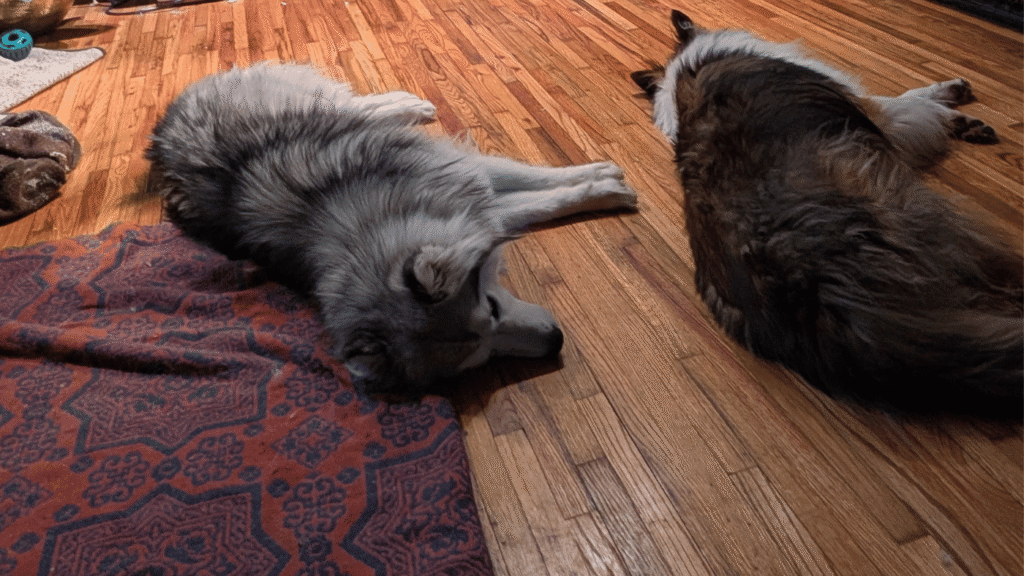
And now? During many storms and fireworks, Luna and Skye are calm, comfy, and completely unbothered.
That kind of progress does not happen by blasting thunder sounds and hoping for the best. It’s done with tiny, successful steps.
How to Practice Storm and Fireworks Sounds at Home
Start by playing storm or fireworks sounds at a very, very low volume while your dog enjoys something wonderful.
Good options include:
- Dinner
- A stuffed Kong
- A lick mat
- A snuffle mat
- A favorite chew
- A food puzzle
- Another calm enrichment activity your dog already enjoys
The sound should be so quiet that your dog notices it little to not at all. That part matters.
We are not trying to scare your dog. We are not trying to force them to “get used to it.” We are pairing a tiny version of the sound with something they already love.
Step-by-Step: A Simple Sound Practice Plan
1. Pick the right time
Practice when your dog is already relaxed. Do not start during an actual storm, during neighborhood fireworks, or when your dog is already worried.
2. Choose a sound source
You can search YouTube for “thunderstorm sounds” or “fireworks sounds.” You can also ask a smart speaker to play storm sounds.
Use caution with ads or sudden volume changes if using online videos. Start with your volume turned waaaaaay down.
3. Start quieter than you think you need to
If you think the volume is low enough, lower it a little more.
Your dog should be able to eat, sniff, chew, and relax normally. If they stop eating, stare toward the sound, pace, hide, bark, or look tense, the sound is too loud or the session is too hard.
4. Pair the sound with something wonderful
Turn on the sound quietly, then give your dog their meal, Kong, Woof pupsicle, lick mat, or food puzzle.
When the food or enrichment activity ends, the sound ends too.
This helps your dog learn:
“Those quiet boom sounds make good things happen.”
5. Keep sessions short
A few minutes a day is plenty. Calm, easy repetition is more helpful than long sessions that push your dog too far.
6. Build slowly over days or weeks
Do not rush to make the sound louder. The goal is not speed. The goal is comfort.
If your dog stays relaxed for several sessions, you may raise the volume slightly. If they seem worried at all, lower the volume again or stop for the day.
Watch Your Dog’s Body Language
Your dog does not have to bark, shake, or hide to be worried. Stress can show up in subtle ways first.
Signs your dog may be uncomfortable include:
- Pacing
- Panting when they are not hot
- Lip licking
- Yawning
- Whale eye, where you can see the whites of their eyes
- Tucked tail
- Pinned ears
- Trembling
- Hiding
- Refusing food or enrichment
- Barking
- Whining
- Trying to leave the room
- Becoming clingy
- Freezing or seeming unusually still
If you see any of these signs, stop or lower the volume. Your dog is giving you helpful information.
This works best when your dog feels safe, successful, and in control.
What Not to Do
When helping a dog with storm or fireworks fear, avoid:
- Playing sounds loudly to “get them used to it”
- Forcing your dog to stay near the noise
- Blocking them from leaving
- Scolding fearful behavior
- Ignoring signs of stress
- Waiting until July 4th or the next severe storm to start helping
Fear is not stubbornness. Panic is not bad behavior. Your dog is having an emotional response and they just need your support.
What If Your Dog Already Panics During Storms or Fireworks?
If your dog already has a big fear response to storms or fireworks, sound practice alone may not be enough, especially during the peak of storm or fireworks season.
Dogs with more intense noise fear may need a combination of:
- A safe resting space
- Sound masking, such as fans, white noise, or calming music
- Management during storms or fireworks
- Veterinary support
- Medication or situational anxiety support from your veterinarian
- A training plan from a qualified force-free trainer
There is no shame in your dog needing extra help. Some dogs have true panic responses to storms or fireworks, and veterinary support can be an important part of keeping them safe and comfortable.
Creating a Storm and Fireworks Safety Plan
Even if you are practicing ahead of time, it is smart to have a plan for real storms and fireworks.
Before loud events, consider:
- Taking your dog out to potty before the noise starts
- Keeping your dog indoors
- Making sure collars, tags, and microchip information are all current
- Closing curtains or blinds
- Using white noise, fans, or music
- Offering a favorite chew, lick mat, or stuffed Kong
- Setting up a cozy safe space – with you, closer to the interior of the house, or even the basement can work
- Avoiding off-leash time during fireworks
- Talking with your veterinarian ahead of time if your dog has a history of panic
For pet sitting, dog boarding, and dog walking clients, this kind of information is also helpful for your care team. If your dog is sensitive to storms, fireworks, or sudden noises, make sure your pet care provider knows what helps your dog feel safe.
Local Support for Dogs in Newton, Wichita, Hesston, and McPherson
At Blue Skies Pet Care, we know Kansas weather can keep dog families on their toes. Storm season, fireworks season, travel season, and summer schedule changes can all affect your dog’s stress level.
Our team supports local pets and families through:
- Dog training in Newton, Wichita, Hesston, McPherson, and nearby areas
- Force-free manners training and puppy training
- Pet care support for families traveling during storm and fireworks season
- In-home pet sitting and dog walking in Newton and surrounding communities
- Limited, small-group dog boarding at The Bungalow
Whether your dog needs help building confidence, practicing calm routines, preparing for boarding, or learning real-life manners, our goal is to help both ends of the leash feel supported.
A Final Reminder
The goal is not to make your dog “tough it out.”
The goal is to help your dog feel safe.
Start quieter than you think you need to. Keep sessions short. Pair the sound with something your dog loves. Watch their body language. And if your dog is already panicking, reach out to professionals for veterinary and force-free training support.
Storms and fireworks may be loud, but your dog does not have to face them without help!
Blue Skies Pet Care is here to support pets and their people in Newton, Wichita, Hesston, McPherson, and surrounding Kansas communities with compassionate dog training, dog boarding, dog walking, and pet care.
Need help creating a realistic plan for your dog?
Reach out to Blue Skies Pet Care to learn more about our dog training and pet care services.