
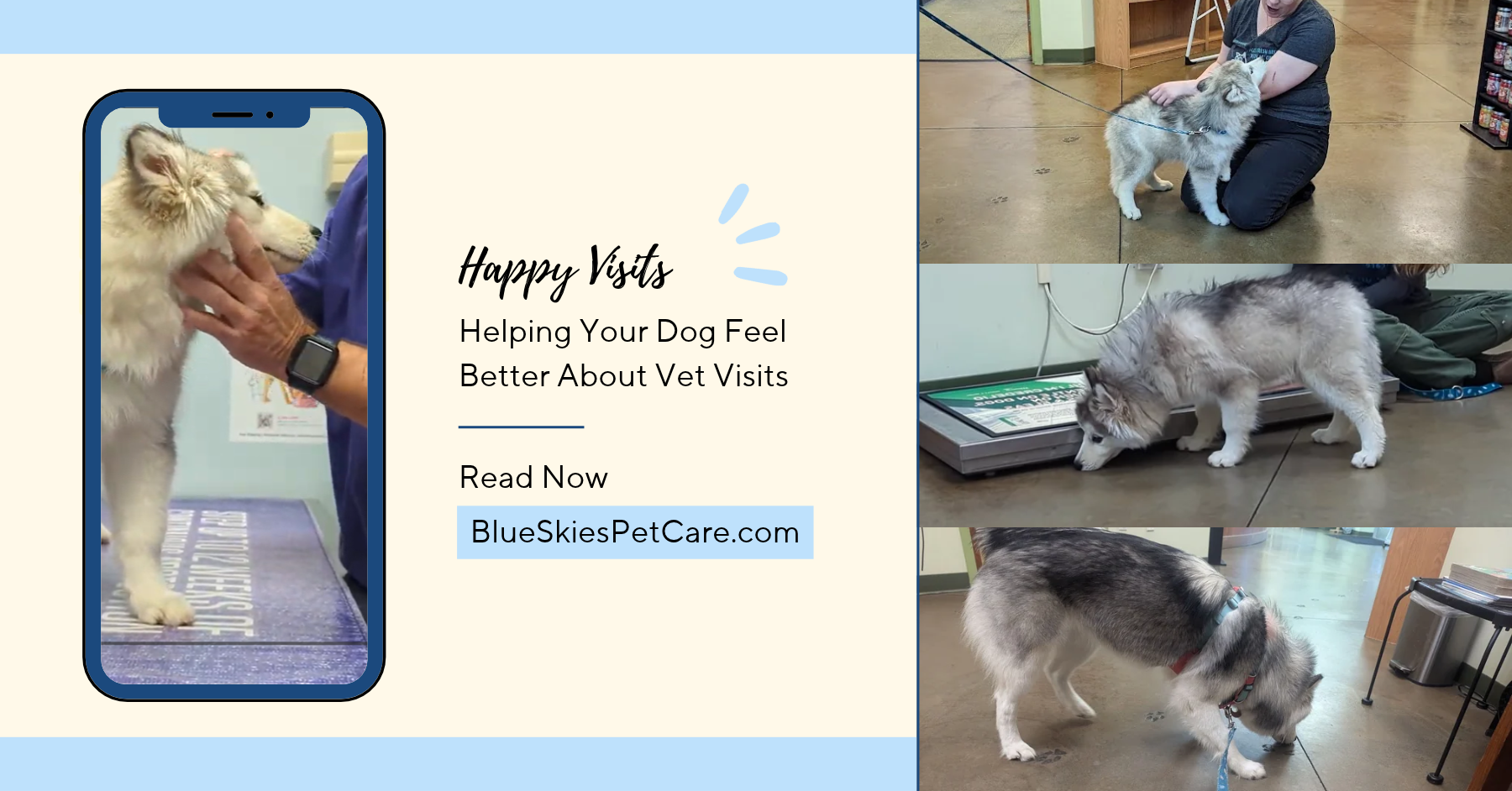
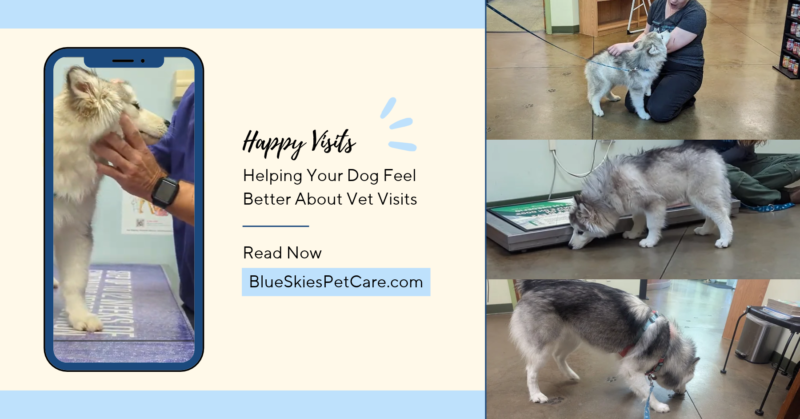
Your dog knows the way to the vet.
Maybe not every turn, but somewhere between pulling into the parking lot and walking through the front door, they figure it out.
For some dogs, that’s exciting. There are people to meet, interesting smells to investigate, and occasionally a very generous receptionist with a jar of treats.
For others, the realization comes with a sudden reluctance to get out of the car – and sometimes even getting into the car to start with. Maybe they stop at the door, tuck their tail, or start panting before anyone has even touched them.
And really. Consider the experience from their perspective.
Most dogs visit the veterinarian because something needs to happen to them. Someone examines their ears, handles their feet, takes their temperature (sometimes rudely by anyone’s standards), or gives them an injection. Sometimes they’re already feeling sick or painful when they arrive.
Even with a wonderful veterinary team, it’s understandable that a dog might develop some reservations about the place.
That’s where veterinary happy visits come in.
What Is a Veterinary Happy Visit?
A happy visit is exactly what it sounds like: a trip to the veterinary clinic where the primary goal is to have a positive experience.
No vaccinations. No blood draws. No uncomfortable examinations.
Depending on your dog’s comfort level, a happy visit might mean walking into the lobby, getting a few delicious treats from a staff member, and heading back home.
It might involve stepping onto the scale, exploring an examination room, or practicing a familiar behavior while the veterinary team provides encouragement and rewards.
And sometimes, a perfectly successful happy visit happens entirely in the parking lot.
The important part isn’t how much you accomplish. It’s how your dog feels about the experience.
These visits give dogs opportunities to experience the veterinary environment without the unpleasant things they may have come to expect.
With repetition and careful planning, those experiences can help change their emotional response to the clinic.
Your Dog Is Learning About the Vet, Even When You’re Not Training
Dogs are constantly learning associations.
The sound of a treat bag might predict something delicious. Picking up a leash might mean it’s time for a walk. Opening the refrigerator could mean someone is about to drop cheese on the floor.
Veterinary clinics develop associations, too.
If every visit involves unfamiliar handling, restraint, or discomfort, a dog may begin anticipating those experiences before anything actually happens.
We can use two well-established behavior modification techniques to help change that.
Desensitization means introducing something at an intensity the dog can comfortably handle and increasing that intensity gradually. A dog who worries about the veterinary clinic might initially practice being near the building before eventually working toward entering it.
Counterconditioning means pairing something that previously predicted an unpleasant experience with something the dog genuinely enjoys. For many dogs, that means especially good food.
Over time, the clinic itself can begin predicting good things.
According to the Cornell University College of Veterinary Medicine, happy visits can help dogs develop more positive associations with veterinary care, even when they already have a history of stressful appointments.
Of course, dogs don’t all start from the same place.
A puppy who has never had an unpleasant veterinary experience needs a very different approach from an adult dog who has spent years being frightened of the clinic.
Fortunately, happy visits aren’t just for puppies.
Puppies: Start Building Good Associations Early
Puppyhood is a wonderful time to introduce happy visits because – genes aside – we’re often working with a relatively blank slate.
Your puppy may have already experienced vaccinations and examinations, but they haven’t necessarily developed strong negative associations with the clinic.
We’d like to keep it that way.
Imagine a puppy whose veterinary experiences include stopping by to get treats, stepping on the scale, meeting friendly staff members, and heading home.
When it’s time for an actual examination, the clinic is already a familiar place where good things happen.
For puppies, consider incorporating brief happy visits between their scheduled veterinary appointments.
You can also practice some of the skills they’ll eventually need during examinations, including standing comfortably on a scale, allowing gentle handling of their paws and ears, and feeling comfortable around unfamiliar people.
Keep these experiences short, rewarding, and appropriate for the puppy’s age and vaccination status. Your veterinary team can help determine when and where your puppy can safely practice.
Adolescent Dogs: Keep the Good Experiences Coming
Adolescence is a period of significant behavioral development. Dogs may become more sensitive to unfamiliar experiences, more easily distracted, or less comfortable with things they previously tolerated.
That friendly puppy who happily greeted everyone at the veterinary clinic might suddenly become hesitant around unfamiliar staff members.
It’s worth noticing those changes and giving adolescence the credit (or blame) it deserves, rather than assuming your dog is simply being difficult.
Continuing happy visits through adolescence helps maintain positive associations while your dog matures.
Practice walking into the clinic, settling briefly, taking treats, and leaving. If your dog is comfortable, you might also work on voluntarily standing near or on the scale or remaining relaxed while a familiar person gently examines their ears – again, followed by many good things, including treats. If it won’t intrude on other patients and your dog loves it – heck – play dog games with a favorite toy in the lobby or exam room!
These experiences can be especially valuable for dogs who are still learning to regulate their excitement or worry around people and unfamiliar environments.
Adult Dogs: It’s Not Too Late to Change the Story
Maybe your dog was perfectly comfortable at the veterinarian for years.
Then came a painful ear infection, an injury, or an unpleasant procedure. Now they’re reluctant to enter the building.
Or perhaps veterinary visits have always been difficult, and you’ve simply accepted that your dog hates going.
A dog’s previous experiences 100% matter, but they don’t have to dictate every future experience forever.
For an adult dog with established fears, happy visits might initially look very different from the puppy version.
You might start by driving to the clinic and offering treats while your dog remains comfortably in the car.
On another day, you might get out and walk around a quieter area of the parking lot.
Eventually, your dog may be ready to approach the entrance.
The progression depends entirely on their comfort.
A dog who is already trembling in the parking lot isn’t ready for a cheerful walk through the lobby, regardless of how many treats are waiting inside.
We need to make the experience easier before expecting the dog to make progress.
Some dogs need multiple visits at the same level before they’re ready for the next step. That’s perfectly reasonable.
Senior Dogs: Comfort Matters More Than Ever
Senior dogs deserve happy visits, too.
In fact, these visits can be particularly valuable because older dogs often need more frequent veterinary care.
Aging can also introduce challenges that weren’t present earlier in life. Arthritis, reduced mobility, vision or hearing changes, and other medical conditions may make veterinary environments and handling more difficult.
A senior dog who suddenly resists having their feet touched may be experiencing discomfort rather than a training problem.
Work with your veterinarian to identify and address any potential pain or medical concerns.
For happy visits, consider shorter sessions, comfortable surfaces, gentle handling, and plenty of opportunities to rest.
Your senior dog doesn’t need to enthusiastically greet the entire veterinary staff for the visit to be worthwhile.
Sometimes the goal is simply to help them feel comfortable entering the building and spending a few minutes there.
How to Plan Your Dog’s First Happy Visit
Before loading your dog into the car with a bag of treats, it’s important to coordinate with your veterinary clinic.
Not every practice offers happy visits, and even clinics that welcome them may need to schedule visits during quieter periods.
Here’s how to get started.
1. Call Your Veterinary Clinic
Ask whether they offer happy visits or would be willing to help your dog practice positive experiences at the clinic. Many veterinary clinics actively encourage these visits. After all, a dog who feels comfortable at the vet makes appointments easier on everyone involved: your dog, you, and the veterinary team who would very much prefer not to wrestle a terrified Labrador onto the scale.
Explain how your dog currently feels about veterinary appointments.
If your dog has significant fear, a history of defensive behavior, or difficulty being handled, share that information ahead of time so everyone can plan appropriately.
2. Bring Something Your Dog Really Loves
Ordinary kibble might work for a dog who already truly enjoys the clinic.
For a dog who’s worried or brand new to the experience, consider bringing something a little more exciting, such as tiny pieces of chicken, peanut butter, cheese, or another food they can safely enjoy. (My dogs are personally big fans of string cheese and peanut butter. I’m passionately devoted to the PB squeeze tubes because I get all the credit for delivering delicious treats without wearing half of them. A win for everyone. Except maybe the peanut butter industry, which would probably prefer I waste more.) Just make sure your peanut butter is xylitol-free!
In any case, you’re looking for something your dog genuinely values.
Food isn’t the only option, either. Some dogs enjoy toys, play, or social interaction, although food is often especially convenient and easy for this type of training.
3. Start Where Your Dog Is Comfortable
For a confident dog, that may mean walking through the front door.
For a worried dog, it might mean starting across the parking lot.
Pay attention to what your dog is telling you.
If they’re hesitant to approach the building, don’t pull them forward or attempt to coax them past something frightening with a treat.
Instead, increase the distance until they’re comfortable enough to engage with you and enjoy their rewards.
4. Make the Experience Brief and Pleasant
Happy visits don’t need to be long.
A few minutes of comfortable exploration, enjoyable interactions, and treats may be plenty.
If your dog is comfortable getting into the lobby, receiving several treats, and leaving, that’s a successful visit.
There’s no requirement to enter an examination room just because you made it through the front door.
5. Let Your Dog Participate Voluntarily
When possible, allow your dog to choose whether to approach staff members, explore a particular area, or participate in handling.
A dog who approaches someone willingly is having a different experience from a dog who is held in place while that person reaches toward them.
Veterinary professionals still need to perform necessary examinations and treatments, of course.
But during a happy visit, we have the opportunity to make participation voluntary and build comfort without the pressure of completing a medical procedure.
6. End While Things Are Going Well
Don’t feel obligated to stretch the visit because your dog seems comfortable.
A short, successful experience gives you a good foundation for the next one.
Your dog doesn’t need to progress every time. Maintaining their comfort is progress, too.
How Can You Tell Whether Your Dog Is Actually Happy?
A dog who isn’t barking, growling, or trying to escape isn’t necessarily comfortable.
Dogs communicate discomfort in many ways, and some of their signals are surprisingly subtle.
Watch for changes such as:
- Lip licking or repeated yawning outside of their usual context
- Turning their head or body away
- A lowered body posture or tucked tail
- Trembling, pacing, or difficulty settling
- Panting when they aren’t hot or physically exerting themselves
- Becoming unusually still or freezing
- Refusing food they would ordinarily enjoy
- Attempting to hide, retreat, or leave
Individual behaviors should always be interpreted in context. A dog who yawns once isn’t necessarily distressed.
But if you notice several stress signals appearing together, or your dog’s behavior changes as they approach the clinic, it’s worth making the experience easier.
Progress means your dog is actually feeling better about the experience, even if their Yelp review of the veterinary clinic is still a work in progress.
And if your dog is too worried to take food, that’s useful info. They may need more distance, a quieter environment, or additional support.
Practice for Veterinary Care at Home, Too
Happy visits are only one part of helping dogs become more comfortable with veterinary care.
Many of the skills they’ll need at the clinic can be practiced at home, where they’re already relaxed.
For example, you can teach your dog to feel comfortable with:
- Gentle touches to their paws, ears, and other body parts (a skill your future self will appreciate when it’s time for nail trims, ear drops, or other at-home care!)
- Standing calmly on a nonslip surface
- Voluntarily placing their chin on a towel or your hand
- Stepping onto a scale
- Brief examination of their teeth and mouth (I don’t brush my dogs’ teeth nearly as often as I should – bless dental chews – but you could be a better dog parent than me!)
- Wearing a basket muzzle comfortably, when appropriate, as a positively trained safety skill
This type of training is often called cooperative care.
The idea is to teach our pets and other animals what to expect during handling and give them opportunities to participate willingly. Even zoos do this with large animals like lions, tigers, and bears (oh my!)
Start with very small steps. You might gently touch your dog’s shoulder, offer a treat, and stop. As they become comfortable, you can gradually practice handling areas that may be more sensitive.
A consistent verbal cue, such as “paw,” can also alert your dog that you’re about to handle their foot. Your dog doesn’t necessarily need to offer their paw for this to be useful.
Pay attention to whether your dog remains comfortable. If they pull away, pause the handling and make the next repetition easier.
Cooperative care training doesn’t eliminate the need for veterinary treatment, but it can make many routine interactions more predictable and less stressful.
What If Your Dog Is Already Terrified of the Vet?
For some dogs, happy visits alone won’t be enough.
A dog with severe veterinary fear may panic at the sight of the building, become defensive when approached, or struggle so much that necessary medical care becomes difficult.
These dogs deserve additional support.
Talk with your veterinarian about a plan that may include lower-stress handling, separate entrances or waiting arrangements, behavioral support, and appropriate medications before appointments.
Medication isn’t a failure of training. For some dogs, reducing anxiety medically can make necessary veterinary care more humane and allow behavior modification to be more effective.
Dogs with significant fear may also benefit from working with a qualified, reward-based behavior professional to develop an individualized desensitization and counterconditioning plan.
The American Animal Hospital Association recommends strategies such as positive handling practice, happy visits, and discussing anxiety-reducing medication with your veterinary team when appropriate.
And remember, necessary medical treatment shouldn’t be delayed simply because your dog isn’t ready to participate voluntarily. Your veterinary team can help you find the safest, least stressful approach available.
A Five-Minute Visit Can Make a Difference
Your dog’s next veterinary appointment might be months away.
That gives you an opportunity to create some positive experiences before they need another examination, vaccination, or medical procedure.
Maybe your first happy visit involves walking into the lobby and getting treats from a familiar veterinary technician.
Maybe it involves sitting in your car in the parking lot for two minutes while your dog enjoys some chicken.
Neither experience needs to be impressive.
What matters is that your dog has another opportunity to learn that visiting the veterinarian can be safe, predictable, and rewarding.
With practice, your dog may start walking through the clinic doors with a little more confidence.
And when they need veterinary care, that confidence is worth a great deal.
Could Your Dog Use a Little Help Making Friends with the Vet (and their techs)?
Maybe your puppy is just starting out, your adolescent dog has developed some opinions about being handled, or your adult dog has decided the veterinary clinic is officially on their list of places to avoid.
We can help with that!
At Blue Skies Pet Care, we offer private, reward-based dog training to help dogs build confidence, develop cooperative care skills, and feel more comfortable with handling and unfamiliar experiences.
We work with dogs of all ages in Newton, Wichita, and surrounding communities, building individualized training plans around what each dog needs.
Visit BlueSkiesPetCare.com or email bark@BlueSkiesPetCare.com to learn more about working together.
P.S. If your dog eventually decides the veterinary clinic is actually a weird little cheese restaurant where people occasionally listen to their heartbeat, I see absolutely no reason to correct that misunderstanding.